Manifesto of Uncontrollable Co-creation
A manifesto on co-creation, responsivity, and the impossibility of controlling what emerges between two.
I spent a long time believing I knew how to choose.
There was a quiet confidence in me that I could look at someone from the outside, almost as if observing a well-built structure, and decide. I saw qualities, coherence, presence, capacity — they were ideas of perfection, clean, organized, like furniture aligned in a house where no one lives — and still, it did not work. It was like keeping the lights on in a place where the air does not circulate. Everything was right, and yet nothing happened.
And then I would do the opposite. I would approach someone with no real compatibility with me, but there was an internal movement pulling me, a projection I did not name and that, precisely for not being named, spread into everything. I saw in the other what I wanted to resolve in myself, like someone who keeps extending a hand even after realizing, repeatedly, that there is nothing there to be touched. And I insisted. And this insistence, which I called surrender, sometimes sustained something close to abuse — a continuous misalignment, almost imperceptible at first, but that the body recognizes like remaining in a position that has already begun to hurt, yet has not been left.
And still, sometimes, rarely, almost without warning, something different would happen. The person was not ideal, not perfect, did not correspond to any of those organized images — and yet something worked. Not because they were better, but because something between us began to move. As if the space between two ceased to be air and gained density, as if something there began to exist that did not belong to either one.
They called it chemistry, and for a while I accepted that word as one accepts a provisional name for something not yet understood. But “chemistry” always seemed like a way of ending the question too early. It mixes attraction, affinity, intensity, and by doing so dissolves what is most precise. Because what matters is not how much is felt, but what happens when two enter into relation.
That was when I stopped looking at the other and began to look at the between. And it was there that something first appeared in the body, before any name. Responsivity.
It was always concrete. A gesture already in motion that suddenly no longer fits its own path. Like when the hand is about to close and encounters another temperature in the air, and has to relearn the gesture in the middle of it. Or a step that was about to land meets a different weight, and the body, before knowing, has already changed. There is no time to decide. There is a minimal deviation — and in that deviation, everything reorganizes.
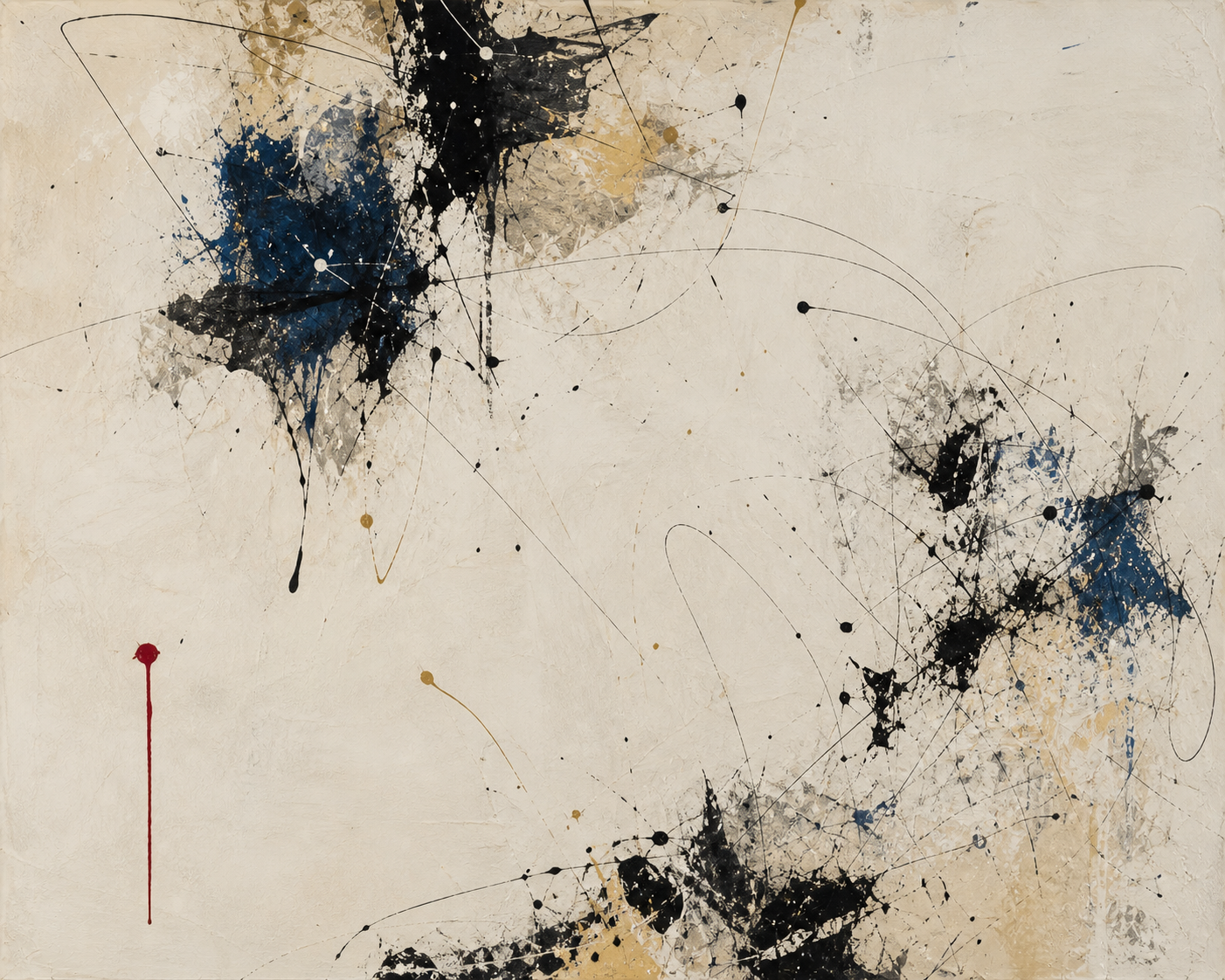
And when this happens on both sides, something emerges. Not as a sum, but as a displacement. Like a third line that no one drew and yet appears. Without prediction, without control. Co-creation.
I understood then that the error was never in the people, but in the criterion. I tried to decide relationships based on individual qualities, as if that could guarantee what only exists when two enter into dynamics. A relationship is not sustained by who the other is, but by what happens when two stop operating as closed units. It is sustained if there is still mutual modification, interruption, response, reorganization — if something still diverts the course and forces the gesture to be born again.
I saw this in the body before formulating any idea. In forró, it became impossible to ignore. I have danced with people who were technically perfect — the correct step, precise timing, clean conduction — and still nothing passed through me. It was like dancing inside a finished drawing, like repeating a sentence that no longer requires listening. Nothing interrupted the gesture, nothing demanded reorganization. It was execution, not encounter.
And I have danced with people where the step failed, where something escaped the expected — but that “error” did not fall. It bent, deviated, found another line. Like a blue note that does not correct the music but opens a fissure through which it breathes. Something left the expected and had to be incorporated before it could be understood. And the dance happened there, in that unstable point, where neither could remain the same.
In theater, it took me longer to see, because it hides better. But it happens before the stage. I began to see that there is a theater in direction itself, a theater that is not in the final scene, but in the process. The actor brings a gesture, the director responds, the actor adjusts, the director shifts — and this continues like a listening that moves.
But there are moments when it breaks.
A gesture that does not come as rehearsed.
A silence that stretches beyond what was agreed.
A look that arrives before the line.
And there, no one can continue.
The director does not correct — responds.
The actor does not execute — reorganizes.
And for an instant, what was being constructed ceases to be guided and begins to happen.
That is where the work begins to exist.
And when the audience enters, this does not diminish — it expands.
The spectator does not merely watch. They alter. The body of the audience shifts the time of the scene, like wind altering the course of a flame. There is a bodily choreography of the spectator — an almost invisible movement that crosses the actor without asking permission. And the actor, if they listen, responds.
And then the work is no longer on stage.
It is in the between.
The desire does not arise from the other as a direct response. It is not proof, not confirmation, not guarantee. It appears in the body as sleep appears — sometimes it comes, sometimes it does not, and it cannot be argued with. There are moments when the body does not open, not as refusal, but as condition. Like skin that contracts in the cold, like an animal that remains still because the environment does not allow movement.
And this says nothing about the one beside you.
But there is something harder to admit. Sometimes the body opens, the relationship continues, and still desire does not remain. Not because something is wrong in the other, but because something has stopped happening between the two, or because something, silently, has closed within me — a noise that does not come from the relation but crosses the body, an unnamed fatigue, a tension that remained from the day, a thought that does not release, an inner place that does not open.
The encounter loses its capacity to displace. The gesture no longer meets resistance, no longer meets difference, no longer needs to reorganize.
And then desire does not disappear — it has nowhere to exist.
Like when the body remains there, but no longer responds to touch.
I had to understand this in the body: co-creation is not continuous, not guaranteed, cannot be demanded, is not proof of love. But it also does not sustain itself. It requires maintenance — not as effort, but as living attention, as the capacity to perceive when the gesture hardens and allow it to move again.
And when this fails, the relationship continues, but by other forces: inertia, effort, idealization.
And the body knows.
I stopped asking if someone was good, compatible, if there was chemistry.
I began to ask:
what happens between us when we are together?
Is there still something that prevents me from remaining the same?
If there is, there is life.
And this cannot be decided.
Only recognized.
Manifesto da Co-criação Incontrolável
Eu demorei muito tempo achando que sabia escolher.
Havia em mim uma confiança silenciosa de que era possível olhar alguém de fora, quase como quem observa uma construção bem feita, e decidir. Eu via qualidades, coerência, presença, capacidade — eram ideias de perfeição, limpas, organizadas, como móveis alinhados numa casa onde ninguém mora — e ainda assim não funcionava. Era como manter as luzes acesas num lugar onde o ar não circula. Tudo certo, e ao mesmo tempo, nada acontecia.
E então eu fazia o contrário. Eu me aproximava de alguém sem nenhuma compatibilidade real comigo, mas havia um movimento interno que me puxava, uma projeção que eu não nomeava e que, por não ser nomeada, se infiltrava em tudo. Eu via no outro aquilo que eu queria resolver em mim, como quem continua estendendo a mão mesmo depois de perceber, repetidas vezes, que não há nada ali para ser tocado. E insistia. E essa insistência, que eu chamava de entrega, às vezes sustentava um abuso — um desalinhamento contínuo, quase imperceptível no início, mas que o corpo reconhece como quem permanece numa posição que já começou a doer, mas ainda não saiu dela.
E ainda assim, às vezes, raramente, quase sem aviso, algo diferente acontecia. A pessoa não era ideal, não era perfeita, não correspondia a nenhuma dessas imagens organizadas — e ainda assim algo funcionava. Não porque ela era melhor, mas porque entre nós algo começava a se mover. Como se o espaço entre dois deixasse de ser ar e ganhasse densidade, como se ali começasse a existir uma matéria que não pertencia a nenhum dos dois.
Chamavam isso de química, e por um tempo eu aceitei essa palavra como quem aceita um nome provisório para algo que ainda não entende. Mas “química” sempre me pareceu uma forma de encerrar a pergunta cedo demais. Ela mistura atração, afinidade, intensidade, e ao fazer isso dissolve o que há de mais preciso. Porque o que importa não é o quanto se sente, mas o que acontece quando dois entram em relação.
Foi aí que eu parei de olhar para o outro e comecei a olhar para o entre. E foi nesse entre que algo apareceu primeiro no corpo, antes de qualquer nome. Responsividade.
Era sempre muito concreto. Um gesto em curso que, de repente, não cabe mais no próprio caminho. Como quando a mão já vai fechar e encontra outra temperatura no ar, e precisa reaprender o gesto no meio dele. Ou como um passo que já ia cair no chão e encontra um peso diferente, e o corpo, antes de saber, já mudou. Não há tempo de decidir. Há um desvio mínimo — e nesse desvio, tudo se reorganiza.
E quando isso acontece dos dois lados, algo surge. Não como soma, mas como deslocamento. Como uma terceira linha que ninguém desenhou e que, ainda assim, aparece. Sem previsão, sem controle. Co-criação.
Eu entendi então que o erro nunca esteve nas pessoas, mas no critério. Eu tentava decidir relações a partir de qualidades individuais, como se isso fosse suficiente para garantir o que só existe quando dois entram em dinâmica. Uma relação não se sustenta por quem o outro é, mas pelo que acontece quando dois deixam de operar como unidades fechadas. Ela se sustenta se ainda existe modificação mútua, se ainda há interrupção, resposta, reorganização — se ainda há algo que desvia o curso e obriga o gesto a nascer de novo.
Eu vi isso no corpo antes de formular qualquer ideia. No forró, isso se tornava impossível de ignorar. Já dancei com pessoas tecnicamente perfeitas — o passo correto, o tempo preciso, a condução limpa — e ainda assim nada me atravessava. Era como dançar dentro de um desenho já pronto, como repetir uma frase que não precisa mais de escuta. Nada interrompia o gesto, nada exigia reorganização. Era execução, não encontro.
E já dancei com pessoas em que o passo falhava, em que algo escapava do previsto — mas esse erro não caía, ele se curvava, desviava, encontrava outra linha. Como uma blue note, que não corrige a música, mas abre uma fenda por onde ela respira. Algo saía do esperado e precisava ser incorporado antes de ser compreendido. E a dança acontecia ali, nesse ponto instável, onde nenhum dos dois podia simplesmente continuar sendo o mesmo.
No teatro, eu demorei mais para perceber, porque ele se esconde melhor. Mas ele acontece antes do palco. Eu comecei a ver que existe um teatro na própria direção, um teatro que não está na cena final, mas no processo. O ator traz um gesto, o diretor responde, o ator ajusta, o diretor muda — e isso segue como uma escuta que se desloca.
Mas há momentos em que isso rompe.
Um gesto que não vem como ensaiado.
Um silêncio que se alonga além do combinado.
Um olhar que chega antes da fala.
E ali ninguém pode continuar.
O diretor não corrige — responde.
O ator não executa — reorganiza.
E por um instante, o que estava sendo construído deixa de ser conduzido e passa a acontecer.
É nesse ponto que o espetáculo começa a existir.
E quando o público entra, isso não diminui — se expande.
O espectador não assiste apenas. Ele altera. O corpo do público desloca o tempo da cena, como vento alterando o curso de uma chama. Existe uma coreografia corporal do espectador — um movimento quase invisível que atravessa o ator sem pedir passagem. E o ator, se escuta, responde.
E então o espetáculo não está mais no palco.
Está no entre.
O desejo não nasce do outro como resposta direta. Ele não é prova, não é confirmação, não é garantia. Ele aparece no corpo como aparece o sono — às vezes vem, às vezes não vem, e não adianta argumentar com ele. Há momentos em que o corpo não abre, não por recusa, mas por condição. Como uma pele que se retrai ao frio, como um animal que permanece imóvel porque o ambiente não permite movimento.
E isso não diz nada sobre quem está diante de você.
Mas há algo mais difícil de admitir. Às vezes o corpo abre, a relação continua, e ainda assim o desejo não permanece. Não porque algo está errado no outro, mas porque algo deixou de acontecer entre os dois, ou porque algo, silenciosamente, se fechou em mim — um ruído que não vem da relação, mas atravessa o corpo, um cansaço que não se nomeia, uma tensão que ficou depois do dia, um pensamento que não solta, um lugar interno que não abre.
O encontro perde a sua capacidade de deslocamento. O gesto já não encontra resistência, já não encontra diferença, já não precisa se reorganizar.
E então o desejo não desaparece — ele fica sem lugar.
Como quando o corpo permanece ali, mas já não responde ao toque.
Eu precisei entender isso no corpo: co-criação não é contínua, não é garantida, não pode ser exigida, não é prova de amor. Mas também não se sustenta sozinha. Ela exige manutenção — não como esforço, mas como atenção viva, como a capacidade de perceber quando o gesto endurece e permitir que ele volte a se mover.
E quando isso falha, a relação continua, mas por outras forças: inércia, esforço, idealização.
E o corpo percebe.
Eu parei então de perguntar se alguém era bom, se era compatível, se tinha química.
Passei a perguntar:
o que acontece entre nós quando estamos juntos?
Ainda há algo que me impede de continuar sendo o mesmo?
Se há, há vida.
E isso não se decide.
Só se reconhece.